I can’t believe that it’s been 4 years since I first created my enchanted garden and what a challenge it was for 2025 with a drought here in Worcester UK.
The year started with an amazing number of primroses and my Rowan tree was covered in flowers for the first time. But Rowan flowers do smell awful – like rotting meat to attract pollinating flies. Yet come late summer only a handful of berries appeared.
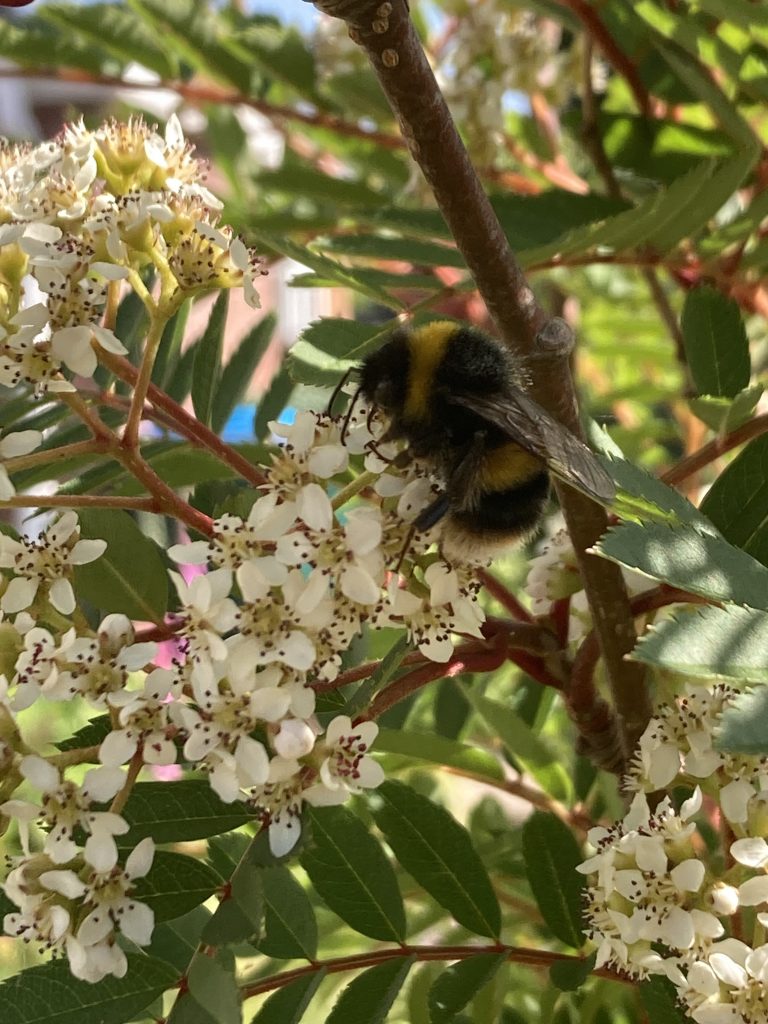
The Rowan tree is an amazing tree.
Here is an excerpt from my enchanted garden book;
‘….it has revealed to me that is ‘Keeper of esoteric law’. When I ask for a definition of esoteric law, Rowan tells me it is nature’s laws and that we need to come back to basics and study nature so that humanity can take a healthier path, rather than one that is purely based on technology. It also resonates to the frequency of magic, alchemy and transformation (I was shown the latter through images of one thing turning into another). At its highest frequency, I was shown the joining of the divine masculine and divine feminine and felt the love and bliss that emanated from this union and so it is no wonder that Rowan is associated with the Goddess Brigid, and I feel Mary Magdalene too.’
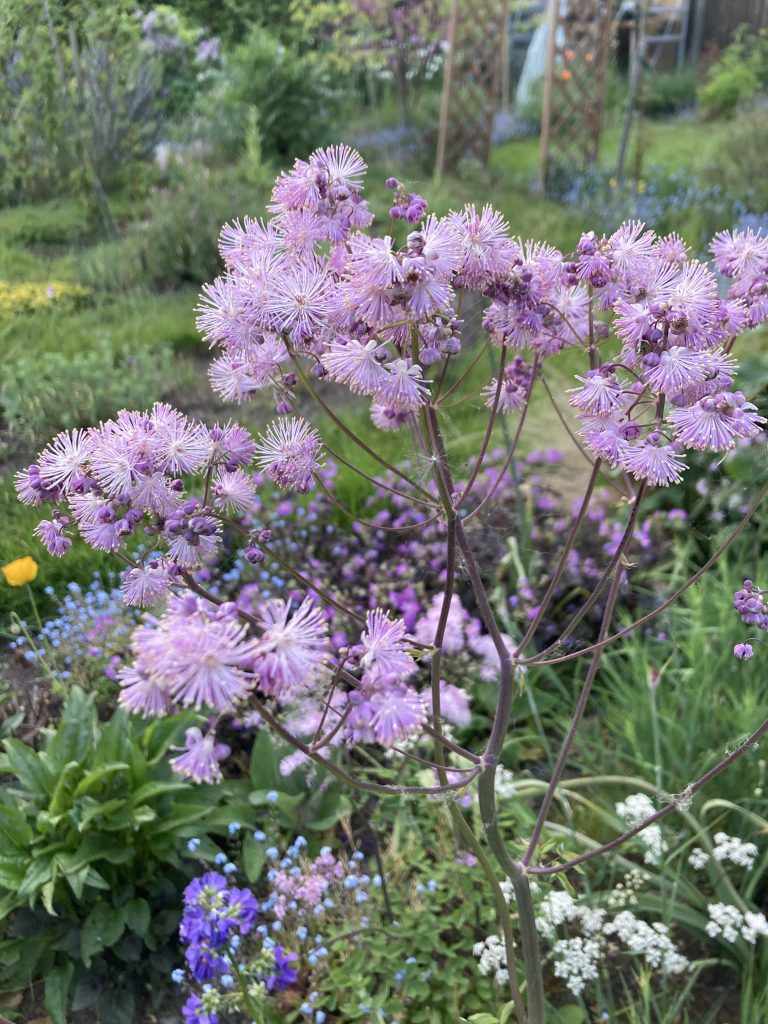
In the spring Thalictrum self-seeded all over the garden whilst I noticed aquilegia slowly disappeared and those that did appear, struggled.
This is the interesting thing about gardening that no 2 years are the same as there are a myriad of factors involved from the tangible, such as weather, to the unseen forces at play not least the magic of a garden reflecting our inner psyche.
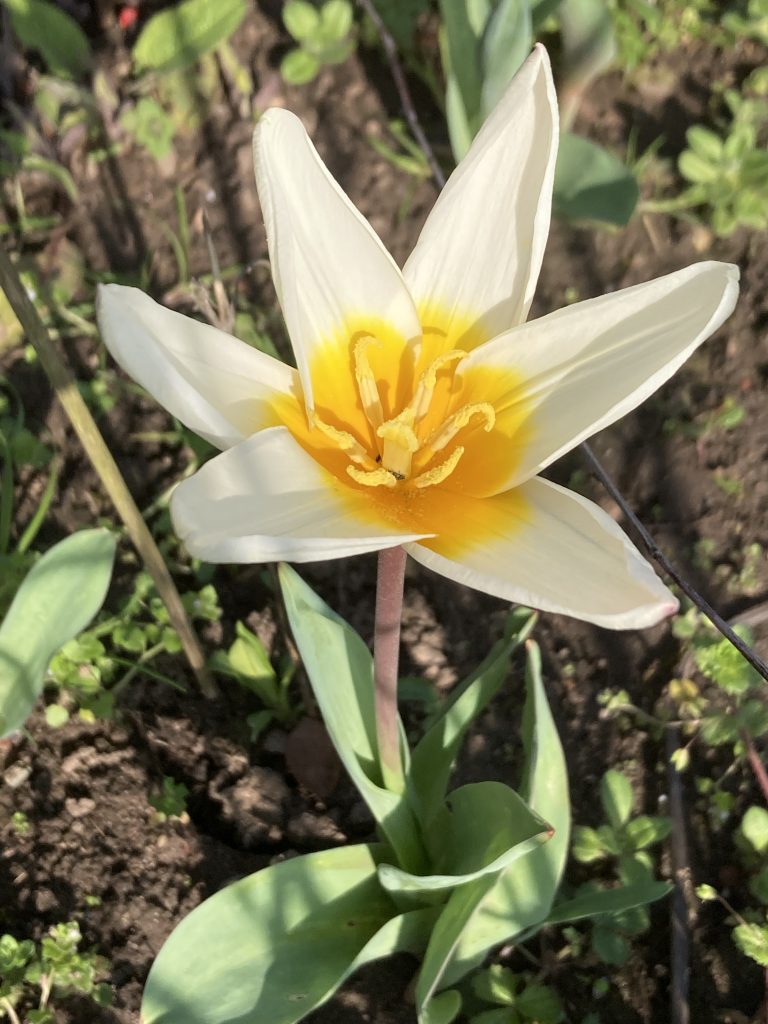
The wild daffodils that I planted in the autumn didn’t appear, but the perennial tulips did – first the tulip Ice Stick with its white petals gilded at the base in gold and flushed purple on the outside followed much later by the fiery orange/red of Princess household. I do love the early splash of colour that tulips bring, lifting us out of the darkness of the winter months.
Each year I try to leave the borders of my garden to do their own thing but I do struggle leaving grass to grow in the flower borders especially couch grass. But then I read that a garden butterfly survey in the UK showed that gardens with long grass had 20% more butterflies, mostly because the presence of species like Meadow Brown and Speckled Wood whose caterpillars feed off grass and then overwinter in the thatch of the grass through winter. For more information on making your garden a haven for butterflies and moths visit wild-spaces.co.uk
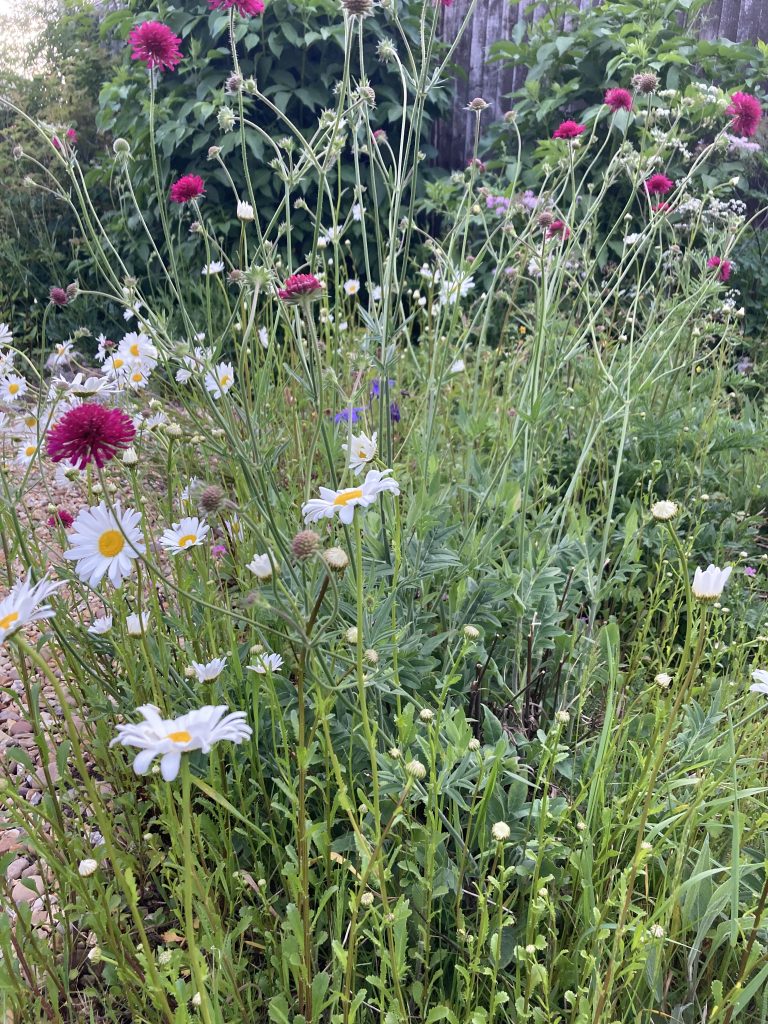
So I am going to try to relax about the grass and just remove it where it is affecting my planting. I also feel it carries a message for me-probably to be less controlling and embrace my inner wildness. I also love the feeling of the wilder spaces of any patch of land. It is much more vibrant, and the back of my garden is no exception, and I feel that these undisturbed areas are home to more nature spirits and elementals which radiate a more magical feel. In my opinion that is why we have said in times gone by that faeries live at the bottom of the garden because they would be undisturbed and prefer the vibrancy of wild plants.
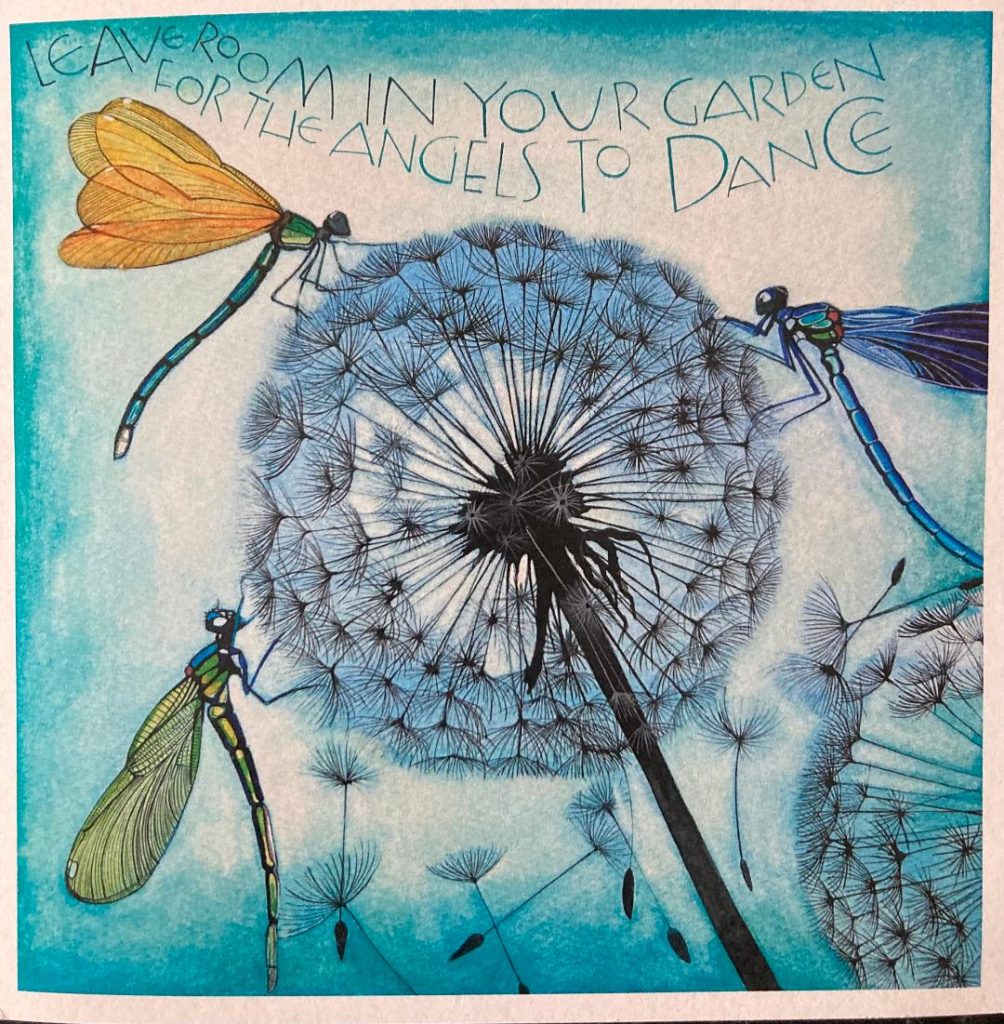
The drought meant that I couldn’t plant the pollinator friendly plants that I had bought in the spring and instead I potted them on and planted them out in the autumn. These were Scabiosa Caucasia and Greater Knapweed (pesticide and peat free purchased from the website rosybee.com). This site contains a list of the top 30 pollinator friendly plants trialled across 2 sites in Oxfordshire and Monmouthshire.
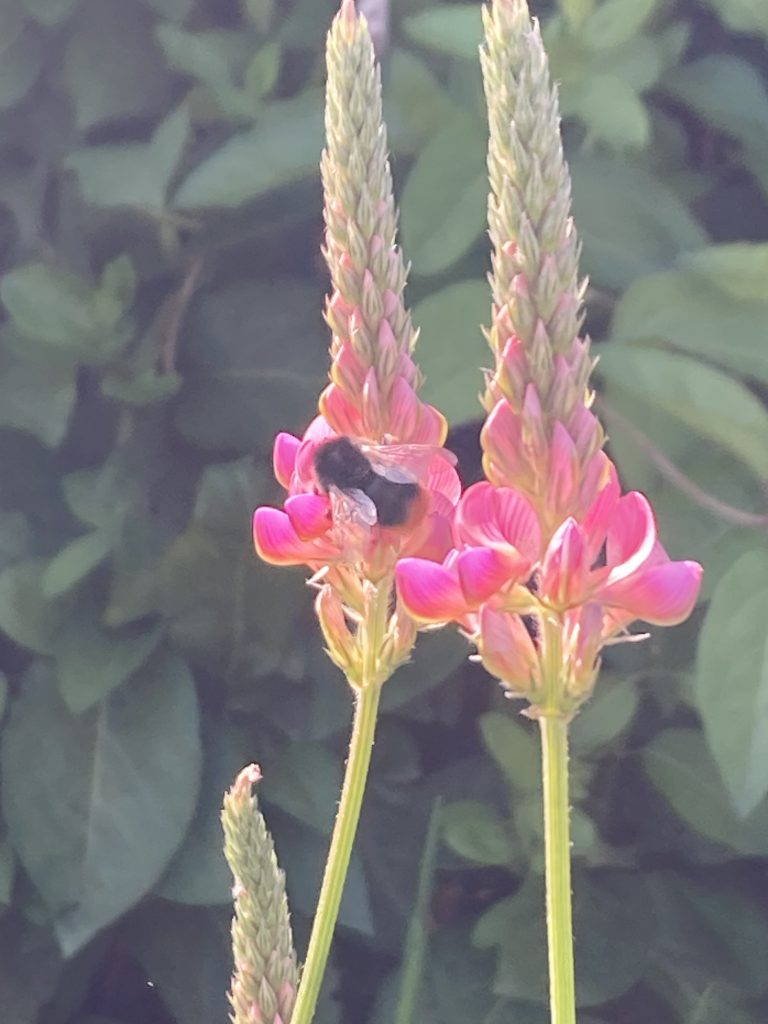
I also planted Sainfoin. It not only looks amazing but also fixes nitrogen with its deep tap root forming nodules containing Rhizobia bacteria which converts atmospheric nitrogen into a form available for plants thus enriching my poor soil.
I also noticed a whole swathe of common clover that came up in one particular bed which I welcomed as it too fixes nitrogen into the soil. I feel the intelligence of nature knows that this is what my poor quality soil needs and so brings in the right plant for this. Like wise vetch, is now growing in my garden which also fixes nitrogen.
Here is another excerpt from my Enchanted Garden book where I talk about Clover.
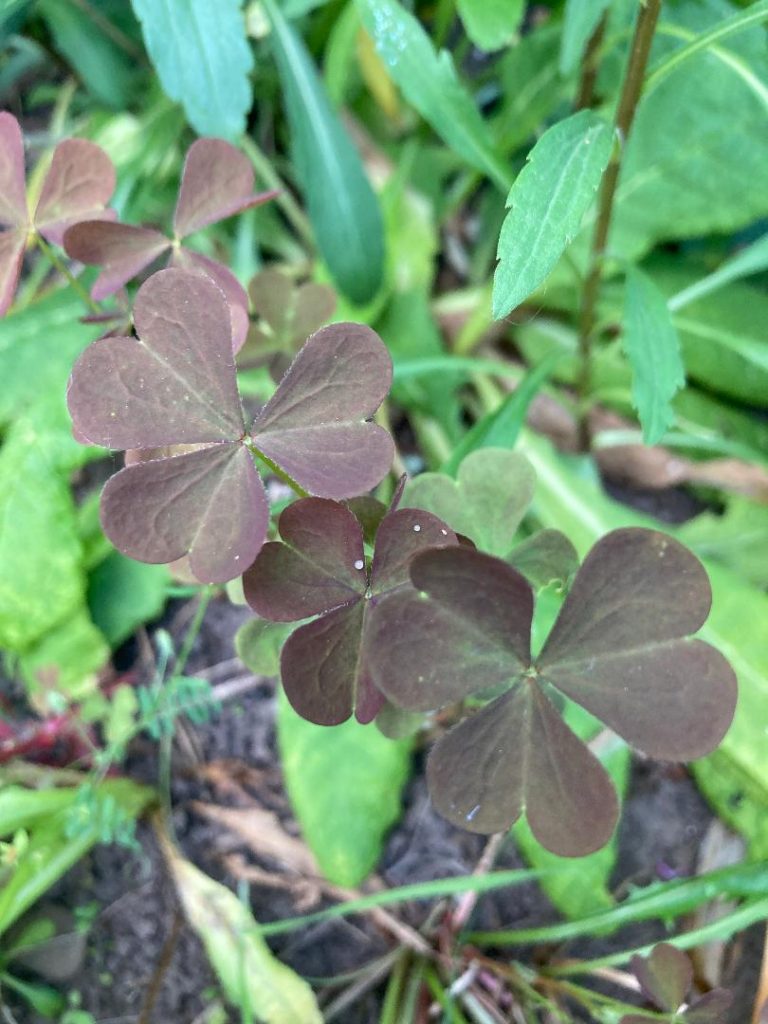
‘Many, many moons ago, Queen Danu came to the land we now know as Ireland and she brought her people with her, in present times known as the Magical Fae Of Danaan or Sidhe. It is said they journeyed by shapeshifting into swans, flying across the seas from the land we now call Iceland, and brought with them their magic. They were the shining ones, tall in stature, and they created cities of light, living in harmony with the land and all the kingdoms upon her. Clover was a sacred plant to them, containing the fire of inspiration and of passion. Queen Danu (later to be deified) and her people flourished in their cities of light for hundreds of years until the human barbarians came, bringing with them their warfaring and brutal ways. These barbarians tried to conquer them, so Queen Danu took counsel and retreated to the Hollow Hills, an alternate dimension of earth, leaving behind many myths and legends about the Sidhe and of clover. In truth, clover carries the fire element trine, the sacred flame of life which can ignite your soul’s passion, that is, your raison d’être for being on this present earth walk.
‘Spirit of Clover
Fire of trine
reveal to me my passion
my heartfelt, unique design.’
My over riding feelings towards the garden during the drought was one of despair as I saw many plants struggle but I only watered those that I knew would die such as my newly planted black lace elder.
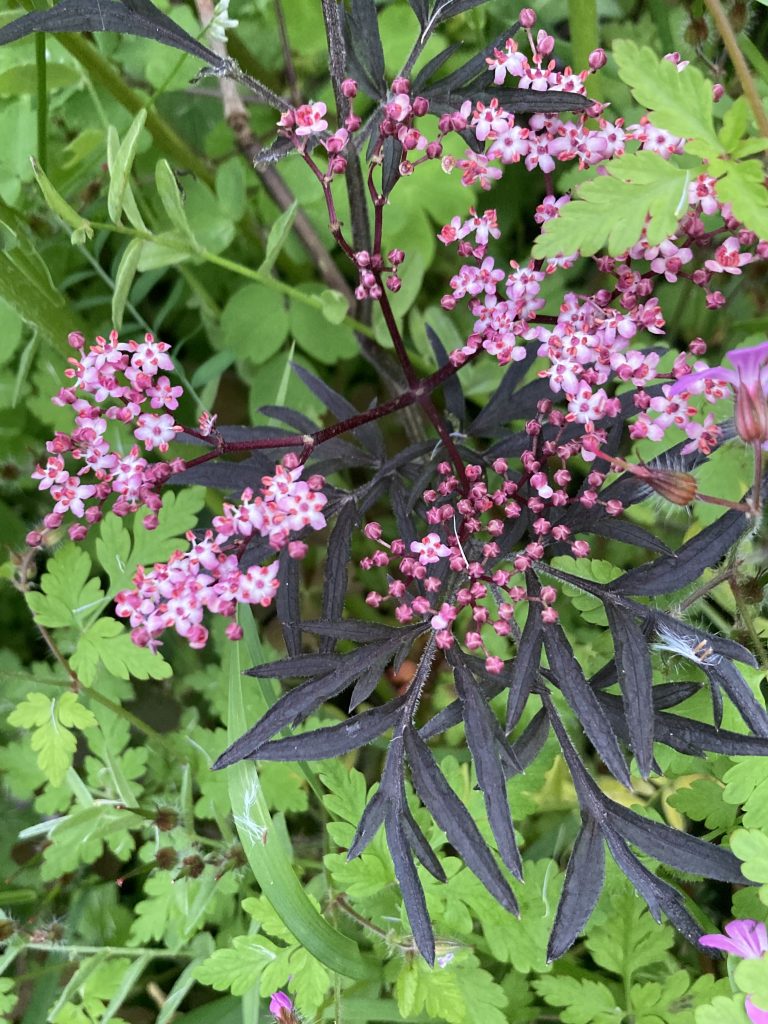
How ever my established common Elder Sambucus Nigra flowered for the first time.
I simply adore Elder.
Here is another excerpt from my book.
‘The elder has a rich history. I see her as golden pulsating light and feel her as a ‘fire of countless summers.
My history is interwoven with yours as my bounty has nourished you on all levels. Those that know, bring their concerns to me, seeking my advice. The fae pay their respects to me as an elder of their community. I am called the Elder Mother—Queen of the Herbs. I asked Queen Maeve of the fae to elaborate on the faeries’ connection to the elder. She responded: We adore the elder. We too are nourished by the flowers and the berries and often our faery paths cross the elder. These are our resting places along our journey where we make merry. Deep rivers of wis dom run through the elder. It has long been told that she will be the meeting point for humankind and the fae, helping to bring us together once more. The elder is where we can all sit in a circle and learn about each other. The fae wish to teach humankind how to look after the planet from their perspective and to teach us about Nature (that which is inherent within) and our duty and place within it
I asked the elder for one last message. There are those of you (both human and fae) who wish to stop this process of coming together, of uniting in one love. Pay no attention. Turn from them and focus on the light and on love. Lay down your differences. See yourself as unique pieces of a jigsaw that makes no higher sense until you have come together. In the completion of it, the higher meaning of life—of consciousness—makes itself known. Blessed be’
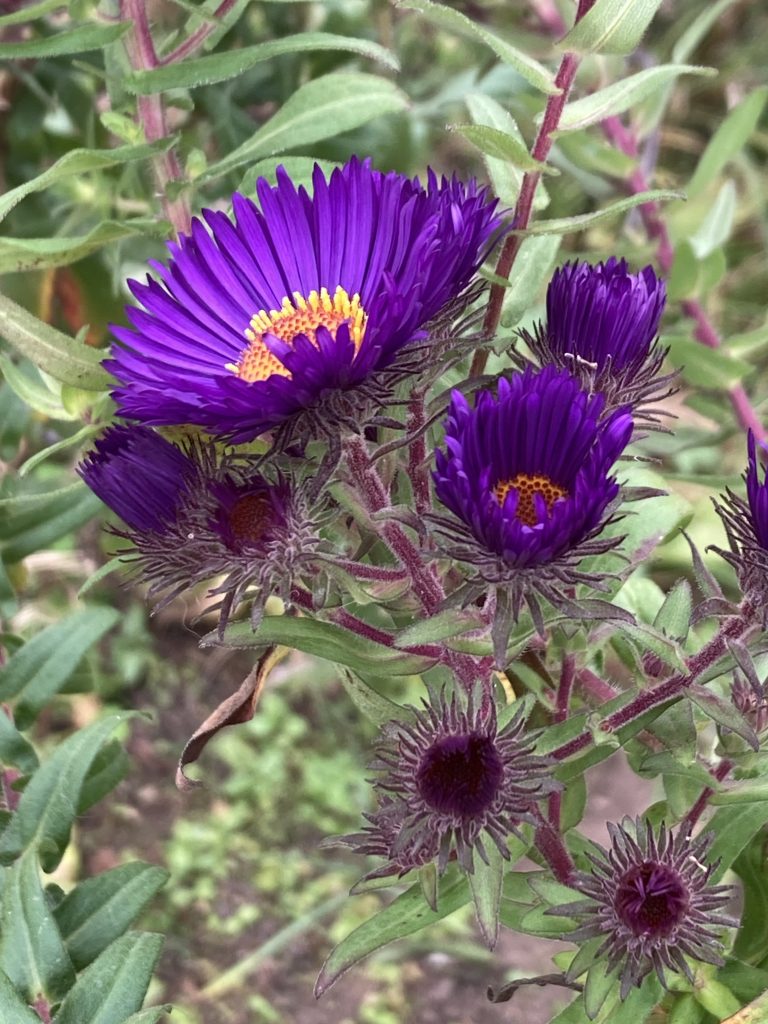
And yet many plants were drought tolerant such as Agastache, Russian sage, Achillea, Asters, Erigeron Karvinskianus, Echinacea, sunflowers, Echinops Ritro, Limonium vulgare, Verbena Bonariensis, Eryngiums, Hyssop Officinalis, Lesser Knapweed, pony tail grass, Oxeye daisy and tree Mallow, the latter was covered in bumble bees.
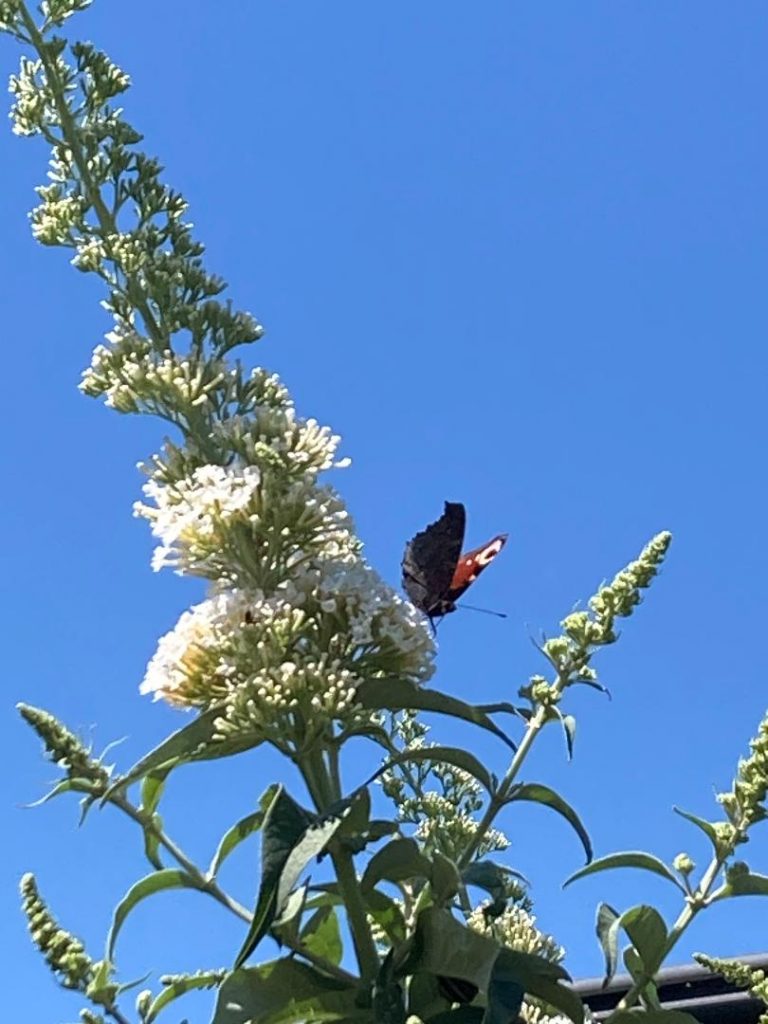
My apple tree was laden with apples come autumn as well as the blackthorn with sloes. The buddleia flourished and grew really tall and flowered twice.
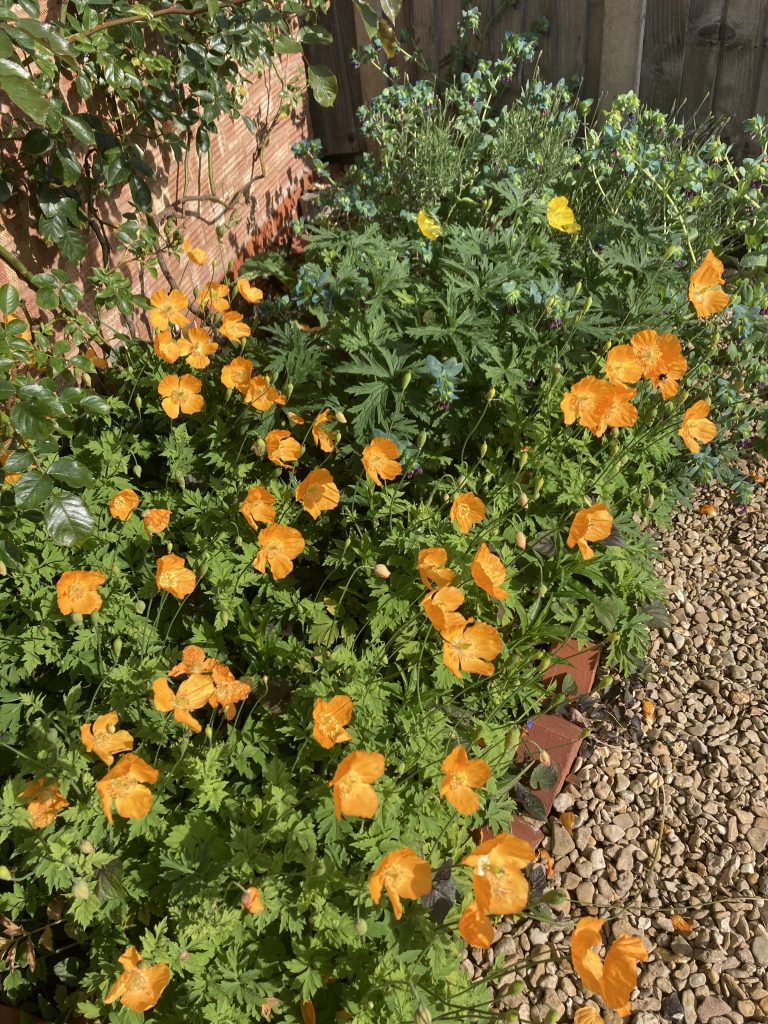
Finally, in my last garden blog I said that I was going to create a front garden. However, I discovered that the pebbles on the drive overlay concrete tiles and it would have been a huge job to get this all up. So I have abandoned all thoughts of creating a front garden, but I will continue to nurture the small flower bed at the front with pollinator friendly plants. Currently it is smothered with poppies and honeywort – a bees paradise!